MDCAT Aggregate Calculator 2026 — Calculate MBBS / BDS Merit (PMDC · UHS · NUMS · KMU · A-Level)
MDCAT Aggregate Calculator 2026
Calculate your MBBS / BDS merit instantly using the 10% Matric + 40% FSc + 50% MDCAT formula. Covers PMDC/UHS, NUMS, KMU & A-Level/O-Level students — plus reverse calc, college merit comparison & FSc optimizer.
Recommended MDCAT Books — Cash on Delivery
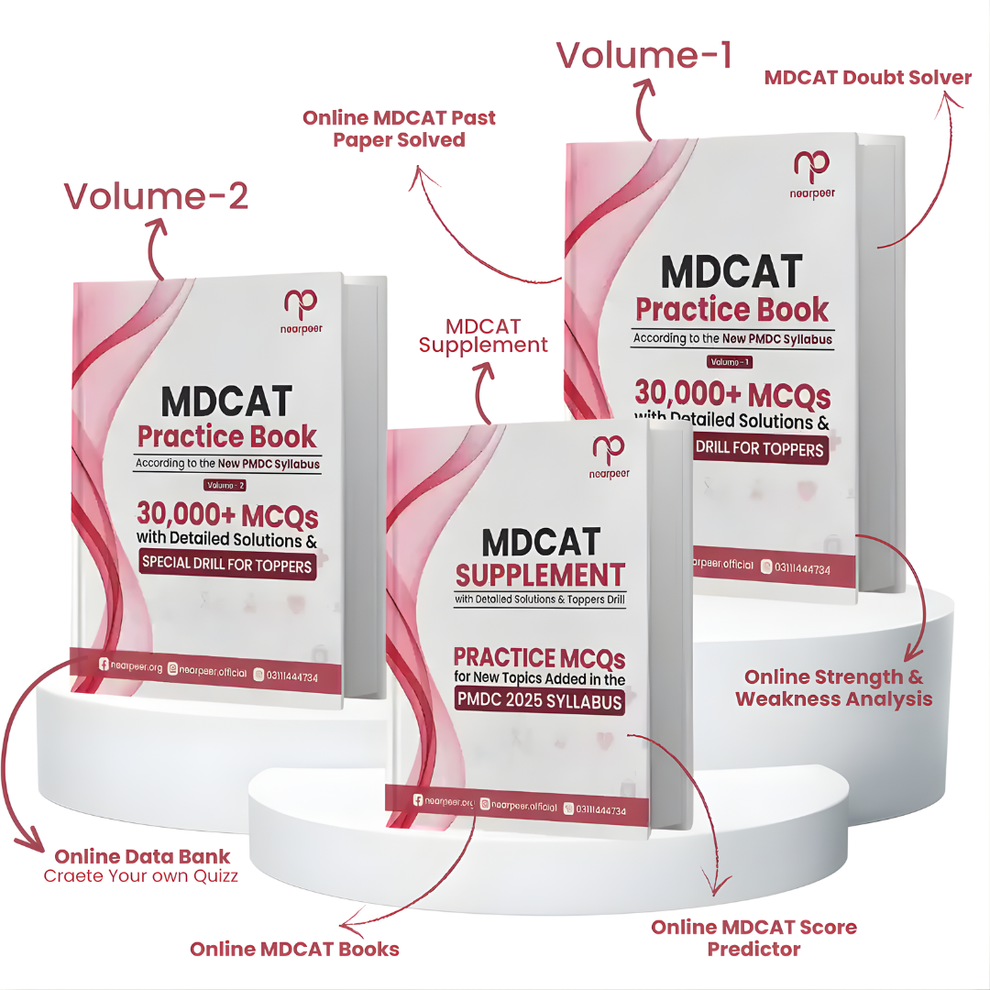
Nearpeer MDCAT Practice Pack 2026
Order Now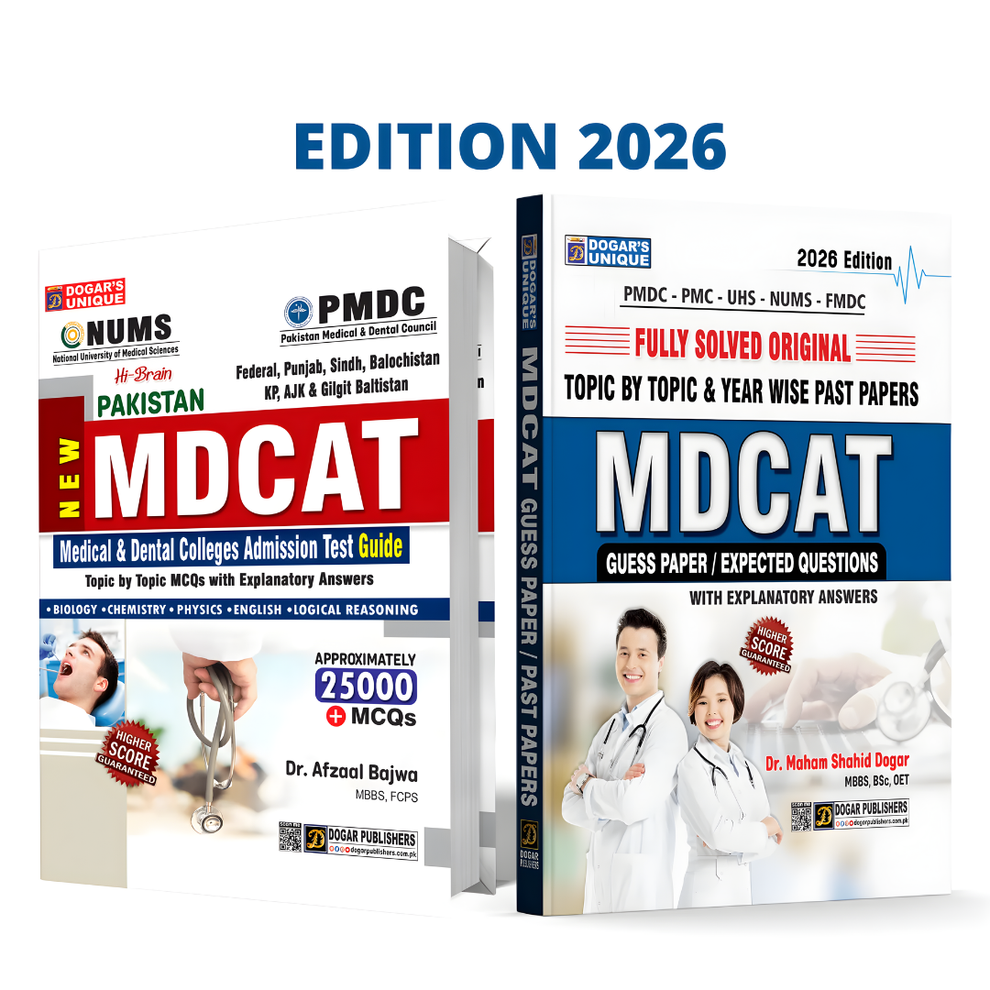
MDCAT 2-in-1 Toppers Bundle 2026
Order NowBooks sold by pkbook.shop — QuizWing’s trusted book partner.
Agg = (Matric% × 0.10) + (FSc% × 0.40) + (MDCAT% × 0.50)Calculating…
Your verdict will appear here.
What MDCAT Score Do I Need?
Enter your Matric and FSc marks + your target aggregate — we’ll compute the exact MDCAT score required.
MDCAT Required Score Calculator
Pick a university, enter your academics, set your target — get the required MDCAT / 180.
Required MDCAT Score
—
Tip: Each 10-mark improvement in MDCAT raises your aggregate by 2.78%. Focus on MDCAT first — it carries 5× more weight than FSc.
MDCAT Closing Merit — All Provinces, All Colleges
Approximate closing merits 2022–2025 across all major medical colleges. Your aggregate is highlighted when calculated above.
| College | Province | Type | Program | Closing Merit | Your Chance |
|---|---|---|---|---|---|
| King Edward Medical University (KEMU) | Punjab | Public | MBBS | ~89–92% | Enter marks |
| Allama Iqbal Medical College (AIMC) | Punjab | Public | MBBS | ~87–90% | Enter marks |
| Fatima Jinnah Medical University (FJMU) | Punjab | Public | MBBS | ~86–89% | Enter marks |
| Nishtar Medical University Multan | Punjab | Public | MBBS | ~85–88% | Enter marks |
| Rawalpindi Medical University (RMU) | Punjab | Public | MBBS | ~84–87% | Enter marks |
| Services Institute of Medical Sciences (SIMS) | Punjab | Public | MBBS | ~83–86% | Enter marks |
| Sheikh Zayed Medical College, Rahim Yar Khan | Punjab | Public | MBBS | ~80–84% | Enter marks |
| Punjab Medical College, Faisalabad | Punjab | Public | MBBS | ~79–83% | Enter marks |
| Sargodha Medical College | Punjab | Public | MBBS | ~78–82% | Enter marks |
| Quaid-e-Azam Medical College, Bahawalpur | Punjab | Public | MBBS | ~78–82% | Enter marks |
| Army Medical College (AMC) Rawalpindi | Federal | NUMS | MBBS | ~89–93% | Enter marks |
| SZABMU Islamabad | Federal | Public | MBBS | ~85–89% | Enter marks |
| CMH Lahore Medical College | Federal | NUMS Private | MBBS | ~83–87% | Enter marks |
| CMH Kharian | Federal | NUMS Private | MBBS | ~80–84% | Enter marks |
| CMH Multan | Federal | NUMS Private | MBBS | ~78–82% | Enter marks |
| Pak Navy Medical College, Karachi | Federal | NUMS | MBBS | ~80–84% | Enter marks |
| Dow Medical College (DUHS) | Sindh | Public | MBBS | ~88–91% | Enter marks |
| Jinnah Medical College (JSMU) | Sindh | Public | MBBS | ~85–88% | Enter marks |
| Liaquat Medical College, Jamshoro | Sindh | Public | MBBS | ~82–86% | Enter marks |
| IBA Sukkur Medical | Sindh | Public | MBBS | ~76–80% | Enter marks |
| KMU Peshawar (Khyber Medical College) | KPK | Public | MBBS | ~83–87% | Enter marks |
| Ayub Medical College, Abbottabad | KPK | Public | MBBS | ~81–85% | Enter marks |
| Saidu Medical College, Swat | KPK | Public | MBBS | ~78–82% | Enter marks |
| Gomal Medical College, D.I. Khan | KPK | Public | MBBS | ~75–79% | Enter marks |
| Bolan Medical College, Quetta (BUMHS) | Balochistan | Public | MBBS | ~73–78% | Enter marks |
| Shalamar Medical College, Lahore | Punjab | Private | MBBS | ~78–82% | Enter marks |
| Lahore Medical & Dental College | Punjab | Private | MBBS | ~76–80% | Enter marks |
| Central Park Medical College | Punjab | Private | MBBS | ~74–78% | Enter marks |
| Azra Naheed Medical College | Punjab | Private | MBBS | ~72–76% | Enter marks |
| Independent Medical College, Faisalabad | Punjab | Private | MBBS | ~70–74% | Enter marks |
Disclaimer: closing merits are approximate (2022–2025 historical). Actual 2026 closing merits depend on candidate performance, seat count, and PMDC policy. BDS closing merit is typically 3–5% lower than MBBS at the same college.
How Your MDCAT Score Affects Your Aggregate
Enter your Matric & FSc — see your PMDC aggregate at every MDCAT score level from 60 to 180.
Tip: Table updates automatically as you type. Green rows = MBBS eligible (≥99 / 55%). Yellow = BDS eligible (≥90 / 50%). Red = below eligibility.
| MDCAT Score | MDCAT % | Aggregate | Eligible For | Verdict |
|---|
FSc Improvement Optimizer
See how improving your FSc score (especially practicals) changes your final aggregate. No competitor has this tool.
| Scenario | FSc Marks | Aggregate % | Gain vs Current |
|---|
Each 10 extra marks in FSc improves your aggregate by ~0.36%. Each 10 extra marks in MDCAT improves it by ~2.78%. MDCAT has 5× more impact — focus there first if time is limited.
How MDCAT Aggregate Is Calculated
The official PMDC 10/40/50 formula, step by step.
- Step 1 — Convert each component to a percentage. Matric % = (Obtained / Total) × 100. FSc % = (Obtained / Total) × 100. MDCAT % = (Score / 180) × 100.
- Step 2 — Apply PMDC weightages. Matric × 10% + FSc × 40% + MDCAT × 50% = contribution of each component to your aggregate.
- Step 3 — Add the three weighted components. The sum (out of 100) is your final MDCAT aggregate percentage used for merit ranking at all medical colleges.
MDCAT carries 50% weight — the single most important factor. A 10-mark MDCAT gain adds 2.78% to your aggregate.
FSc carries 40% weight — max out your practicals. They’re easy marks that directly impact your aggregate.
Matric carries only 10% weight — don’t stress over it, but don’t ignore either.
All 4 Formulas — Side by Side
PMDC / UHS
10 / 40 / 50All Punjab public sector + SZABMU + most private colleges.
NUMS
10 / 40 / 50AMC, CMH colleges + Pak Navy Medical. Uses NUMS’s own entry test.
KMU (KPK)
20 / 40 / 40Higher Matric weight (20% vs 10%). Uses ETEA or national MDCAT.
A-Level / O-Level
10 / 40 / 50Uses IBCC equivalence percentages for O-Level + A-Level, then standard MDCAT.
MDCAT 2026 Minimum Marks — MBBS & BDS
MBBS Eligibility
- Minimum MDCAT score: 99/180 (55%)
- Minimum FSc marks: 60% (65% possible in 2026 — verify)
- Both conditions must be met simultaneously
- MDCAT pass mark alone does not guarantee admission
BDS Eligibility
- Minimum MDCAT score: 90/180 (50%)
- Minimum FSc marks: 60%
- Closing merits typically 3–5% lower than MBBS
- Same PMDC aggregate formula applies
Competitive Targets
- Top government college: ≥88% aggregate (KEMU / AIMC / AMC)
- Good government college: ≥82% aggregate
- Private medical college: from ~70% aggregate
- Merit is competitive — thousands of students compete
Note: meeting minimum eligibility does NOT guarantee admission. Merit is competitive — thousands of students compete for limited seats every year.
MDCAT Aggregate Calculator — Frequently Asked Questions
The official PMDC / UHS formula is Aggregate % = (Matric % × 0.10) + (FSc % × 0.40) + (MDCAT % × 0.50). Matric and FSc are out of 1100; MDCAT is out of 180.
Convert each score to a percentage, multiply by PMDC’s weight (10%, 40%, 50%), and sum. Or use the calculator above — enter your marks and get the result instantly.
PMDC’s official weightage: Matric carries 10%, FSc 40%, MDCAT 50%. Because MDCAT has 5× FSc’s effect per mark, your MDCAT score is the single most important factor in your merit.
Above 88% is excellent (KEMU / AMC / AIMC). 83–87% is competitive for most Punjab public sector. 78–82% qualifies for private colleges and some public seats. Below 73% means private route.
PMDC eligibility minimum is 55% MDCAT (99/180) + 60% FSc. For admission, closing merits range from ~70% (private) to 92% (top public colleges).
99 out of 180 (55%). This is the pass mark — real admission requires 150+/180 for competitive public colleges.
90 out of 180 (50%). BDS closing merits are typically 3–5% lower than MBBS at the same college.
Same 10/40/50 weightage but NUMS uses its own entry test (separate from MDCAT). Register at nums.edu.pk. NUMS test total is typically 200.
Yes — switch to the A-Level tab. Use IBCC equivalence percentages (not raw grades). Apply for IBCC equivalence at ibcc.edu.pk.
Toggle the “FSc Part-2 result not out” switch — total becomes 550. Your aggregate may shift by ±1–2% when Part-II is declared.
MDCAT has 5× the impact. Each 10 MDCAT marks = +2.78% aggregate vs +0.36% for FSc. Focus on MDCAT first if you can only improve one.
KEMU closes at ~89–92% aggregate. With 90% Matric + 90% FSc, you need roughly 165+/180 in MDCAT. Use the reverse calculator for your exact numbers.
AMC uses the NUMS Entry Test (not PMDC MDCAT) and closes around 89–93% aggregate. You need ~160+/200 on the NUMS test. Use the NUMS tab above.
Switch to the NUMS tab. Enter Matric, FSc and NUMS Entry Test score (out of 200). The calculator applies 10/40/50 weightage with the NUMS test replacing MDCAT.
Switch to the KMU tab. KMU uses 20% Matric + 40% FSc + 40% Entry Test — higher Matric weight than PMDC.
UHS (University of Health Sciences Lahore) uses the same PMDC 10/40/50 formula. Select the PMDC / UHS tab to calculate merit for all Punjab government medical colleges.
Each university publishes its own merit list separately — UHS at uhs.edu.pk, NUMS at nums.edu.pk, KMU at kmu.edu.pk, DUHS at duhs.edu.pk, BUMHS at bumhs.edu.pk. Expected Nov–Dec 2026.
A merit calculator that applies the official PMDC formula (10% Matric + 40% FSc + 50% MDCAT) to compute your final MBBS/BDS merit aggregate from your board & test scores.
Same thing as the MDCAT aggregate calculator — a tool that uses the PMDC 10/40/50 formula to rank your merit for MBBS/BDS admission across Pakistani medical colleges.
More MDCAT Tools on QuizWing
Start Your MDCAT 2026 Preparation
65,000+ solved MCQs, past papers, subject-wise practice & full mock tests — all free on QuizWing.